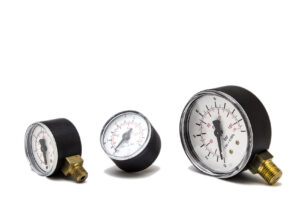
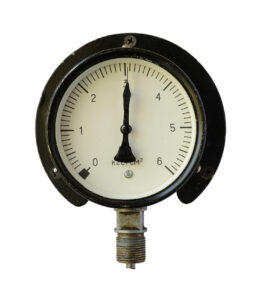
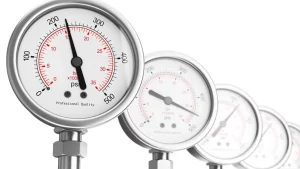
Micro-pressure gauges, designed for measuring low-pressure ranges, often utilize a liquid-filled case to dampen vibrations, reduce wear on internal mechanisms, and provide lubrication. The choice of filling fluid is critical for optimal performance, with silicone oil and glycerin being the two primary options. Each fluid offers distinct advantages and limitations based on the application’s specific requirements.
Silicone Oil: The High-Performance Choice
Silicone oil, a synthetic polymer, is frequently the preferred fluid for precision micro-pressure gauges, especially in demanding industrial and laboratory settings. Its foremost advantage is its exceptional viscosity stability across a wide temperature range. Unlike organic fluids, silicone oil maintains consistent damping characteristics from very low to moderately high temperatures, ensuring reliable gauge response and pointer stability in fluctuating environments. Furthermore, it exhibits excellent oxidation and chemical resistance, leading to long service life without significant degradation or gumming. Silicone oil is also inherently inert and non-toxic, making it suitable for applications in food, beverage, and pharmaceutical industries. Its primary drawback is its higher cost compared to glycerin.
Glycerin: The Cost-Effective Solution
Glycerin, a natural organic compound, serves as a widely used, economical filling fluid. It provides effective vibration damping and lubrication at a lower initial cost. In standard room-temperature applications with stable ambient conditions, glycerin performs adequately. However, its viscosity is highly sensitive to temperature changes. At low temperatures, glycerin can become excessively thick, causing the gauge pointer to move sluggishly or even stall. Conversely, at elevated temperatures, it may thin out, reducing its damping effectiveness and potentially leading to faster mechanism wear. Glycerin is also hygroscopic, meaning it can absorb moisture from the air over time if the seal is compromised, which may alter its properties and lead to internal fogging or corrosion.
Selection Criteria
The decision hinges on the operating environment and performance expectations. For applications involving significant temperature variations, requiring long-term stability, or operating in sensitive industries, silicone oil is the superior and recommended choice. Its stable viscosity and inert properties justify the higher investment by ensuring accuracy and durability. For static, temperature-controlled environments where cost is a primary concern and extreme precision is less critical, glycerin remains a viable and functional option.
In conclusion, while glycerin offers an economical entry point, silicone oil provides robust, reliable performance for micro-pressure gauges under diverse and challenging conditions, making it the technically preferred fluid for most precision applications.