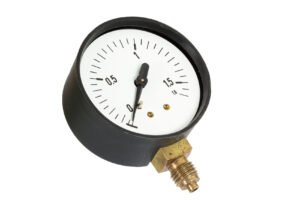
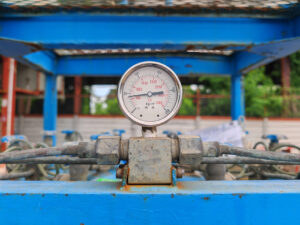
A drag pointer, also known as a tell-tale pointer, follower pointer, or maximum indicator, is a secondary needle found in certain pressure gauges designed to record and display the highest pressure reached during operation. Unlike the main indicating needle that continuously reflects current system pressure, the drag pointer remains at the peak position after pressure decreases, providing a permanent record of the maximum value experienced .
Mechanism of Operation
The drag pointer operates through mechanical interaction with the main needle. As pressure increases, the main needle moves forward and pushes the drag pointer along with it. The drag pointer is mounted with sufficient friction—typically spring-loaded in a bushing—to prevent it from returning when the main needle retreats. This means that when pressure drops, the main needle returns to its current reading while the drag pointer stays at the highest position attained .
In some designs, the drag pointer can be bi-stably positioned, latching into a recess that prevents the main needle’s actuator from moving it again after the maximum has been reached. This ensures the recorded peak remains reliable even with repeated pressure fluctuations .
Practical Applications
The primary function of the drag pointer is peak pressure monitoring. This is valuable in applications where pressure spikes or transient overpressure events could damage equipment or affect process quality . For example, in hydrostatic testing assemblies, the drag pointer records the highest pressure achieved during the test, allowing verification that the required test pressure was reached . In water supply systems, it helps identify pressure surges caused by municipal supply fluctuations or pump malfunctions, enabling proper sizing of pressure relief valves .
After a reading is recorded, the drag pointer must be manually reset to the zero position using a specialized tool or a central knob, ready for the next measurement cycle