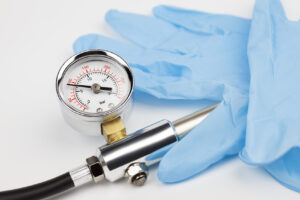
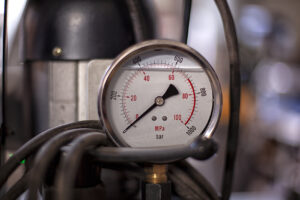
In the vast ecosystem of industrial instrumentation, the pressure gauge stands as a fundamental and indispensable device. Its primary function is straightforward: to measure and display the pressure of a fluid (liquid or gas) within a system. However, behind this simple purpose lies a world of engineering precision, critical for safety, efficiency, and process control across countless industries, from oil and gas and chemical processing to water treatment and manufacturing.
Core Operating Principle and Types
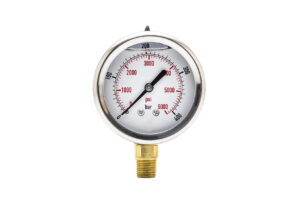
Most traditional pressure gauges operate on the Bourdon tube principle. This elegantly simple mechanism involves a flattened, curved tube that tends to straighten under internal pressure. This movement is transferred through a linkage to a gear and pinion, which rotates a pointer across a calibrated dial. The dial face is clearly marked with the pressure range (e.g., 0-100 Bar) and units (PSI, Bar, kPa). While Bourdon tube gauges are the workhorses for general purposes, other types serve specialized needs. Diaphragm gauges are ideal for low pressures or viscous fluids, capsule gauges excel in measuring very low gas pressures, and digital pressure gauges offer precise numerical readouts, data logging, and output signals for automation systems.
Critical Selection Parameters
Choosing the correct pressure gauge is vital for performance and safety. Key parameters include:
- Pressure Range: The gauge’s maximum scale (Full Scale Value) should be 1.5 to 2 times the normal operating pressure to avoid constant peak stress and ensure a long lifespan.
- Accuracy Class: Defined by standards like ASME B40.1, this indicates the permissible error margin (e.g., ±1% of full scale for Class 1.0).
- Connection and Mounting: The process connection, such as a 1/2″ NPT thread, must match the system’s port. Mounting options include direct stem mount, surface mount, or panel mount.
- Material of Construction: The case, window, and most critically, the wetted parts (like the Bourdon tube and socket) must be compatible with the medium. For corrosive media like HCl, materials like 316L stainless steel, Monel, or PTFE-coated internals are specified.
- Special Features: Gauges may be filled with glycerin or silicone oil to dampen vibration and pulsation, protecting internal mechanisms. For hazardous environments, safety features like blow-out backs are essential.
Installation and Maintenance
Proper installation is crucial. Gauges should be mounted in an accessible location, often using a separator or syphon to protect the sensor from high-temperature media like steam. Regular calibration against a known standard is necessary to maintain accuracy. A failing gauge, indicated by sticking needles, zero-point drift, or case leakage, must be replaced immediately to prevent safety risks or process deviations.
In conclusion, the humble pressure gauge is a sophisticated instrument whose correct selection, installation, and maintenance are non-negotiable for safe and efficient industrial operations. It transforms invisible force into a reliable visual signal, acting as the eyes of an engineer onto the health of a pressurized system.